Kevlar Serif Font for Handmade Labels & Printables
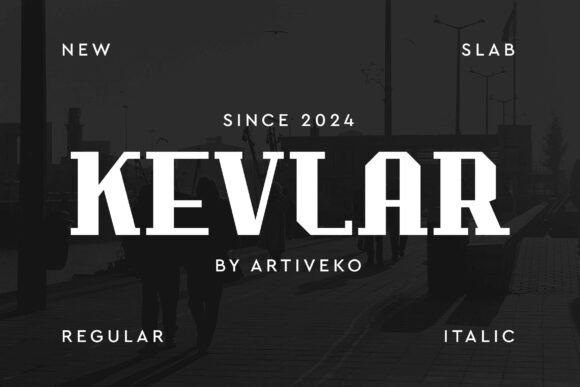
If you've ever held a beautifully printed candle label, traced the crisp serifs on a wedding welcome board, or admired the confident presence of a boutique product tag — you know how much a single font can shape perception. That’s exactly where Kevlar steps in: a vintage serif font built not just for looks, but for real-world making. It’s got sturdy serifs, bold contrast, and that subtle retro flair that feels familiar without feeling dated — like your favorite well-worn recipe card, but with serious design muscle.
As someone who cuts vinyl for shop signs, designs printable planner pages, and ships hundreds of handmade greeting cards each season, I reach for Kevlar when I need elegance that holds up under scrutiny — whether it’s laser-printed on kraft tag stock or scaled down to 8pt on a mini sticker. Its strong vertical stress and generous x-height mean it stays legible even at smaller sizes, and its generous letter spacing keeps words from collapsing when cut on Cricut or Silhouette machines. No more squinting at preview thumbnails or re-cutting a batch because the “R” lost its leg.
I use Kevlar across so many physical product types: soy candle labels (especially for amber glass jars — the contrast between warm wax and sharp serifs is magic), farmhouse-style wall signs (“Gather Here”, “Brew & Belong”), wedding welcome boards, holiday gift tags, and boutique clothing hang tags. It works especially well for short, high-impact phrases — names, titles, shop slogans, seasonal headers — where you want instant recognition and quiet authority. It’s not meant for long paragraphs in a booklet, but it shines as a display font that anchors your design and tells customers, “This was made with care.”
For printable creators, Kevlar adds instant sophistication to digital downloads. Think: editable wedding invitation suites where the couple’s names pop in Kevlar against a soft watercolor background, or printable wall art sets with minimalist quotes like “Grow Wild” or “Made With Love”. Because it’s a true serif font with clean terminals and consistent stroke weight, it scales cleanly across PDFs, PNG overlays, and SVG layers — no pixelation, no fuzzy edges in mockups. And if your version includes stylistic alternates or ligatures (check your download!), those little flourishes add polish to monogrammed stationery or custom tote bag designs without overcomplicating your workflow.
Readability matters most where function meets form — like tiny 6mm sticker labels for soap bars or embossed business cards. Kevlar delivers there too. Its open counters (the enclosed spaces in letters like ‘e’, ‘a’, and ‘o’) prevent ink fill-in during printing, and its sturdy serifs give cutting machines clear anchor points. I’ve tested it down to 5pt on matte sticker paper — still crisp, still recognizable. Just avoid ultra-thin weights if you’re laser-cutting fine details; stick with the regular or bold for best results on physical goods.
Pairing Kevlar thoughtfully makes all the difference. For invitations or layered SVG designs, I often combine it with a relaxed handwritten font for names or callouts — think soft script for “Emma & James” above a bold Kevlar “2024”. For product packaging or shop signage, I pair it with a clean, neutral sans serif (like Montserrat or Inter) for body text or pricing — the contrast creates hierarchy without competition. And yes — it pairs beautifully with other serif fonts too, especially if you’re building a full brand identity kit: use Kevlar for headlines and a lighter, more delicate serif for captions or copyright lines.
What really sets Kevlar apart from other vintage serif fonts is how grounded it feels. It doesn’t lean too far into art deco drama or 1970s psychedelia — instead, it lands right in that sweet spot of timeless typography: confident but approachable, strong but not stern. That’s why it reads as premium without feeling pretentious on a $12 ceramic mug or a $4 printable planner sticker sheet. Customers subconsciously associate that kind of thoughtful type choice with quality craftsmanship — and that trust translates directly to cart conversions and repeat buyers.
Before you download or purchase, double-check what’s included: most versions of Kevlar come in OTF and TTF formats (fully compatible with Cricut Design Space, Silhouette Studio, Canva, and Adobe apps), plus bonus files like webfonts or SVG-ready variants. If multilingual support matters for your audience — say, bilingual wedding invites or international Etsy listings — confirm whether Latin Extended-A characters are covered. And always verify the commercial license: Kevlar is a commercial font, meaning you’re fully cleared to use it in physical products you sell, digital templates you license, SVG cut files you list on Etsy, and client branding projects — no extra fees or attribution required.
Whether you're hand-lettering a chalkboard menu and tracing over it with Kevlar for consistency, layering it into a seasonal Canva template pack, or using it to brand your entire small-batch apothecary line, this serif font earns its place in your core design assets. It’s not just another pretty face — it’s a reliable, readable, commercially smart tool that helps your handmade work look intentional, professional, and deeply human.