Vintage Wood Blocks Font for Handmade Labels & Printables
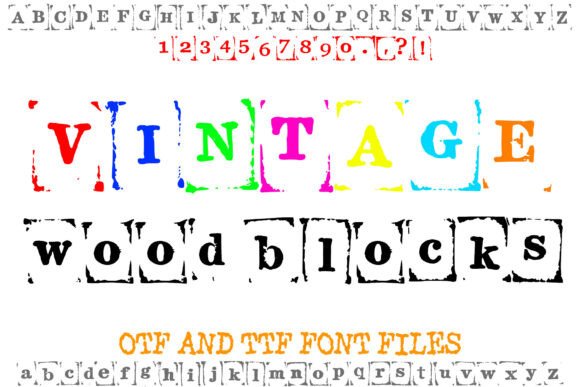
As a maker who’s spent years designing candle labels, wedding stationery, and boutique packaging, I know how much weight a single font choice carries—not just in aesthetics, but in perceived authenticity, warmth, and trust. That’s why Vintage Wood Blocks stands out in my toolkit: it’s not another digital simulation of texture. It’s a true decorative typeface born from real wood printing blocks—each letter pressed by hand, photographed with care, and digitized to preserve every grain, ink bleed, and subtle imperfection.
This isn’t a script font or a sleek sans serif. Vintage Wood Blocks is a tactile, grounded display font—ideal for short, high-impact phrases where character matters more than paragraph flow. Think “Small Batch,” “Hand-Poured,” “Est. 2018,” or “Farmhouse Kitchen.” Its bold, slightly irregular letterforms carry the quiet confidence of handmade goods. There’s no artificial distressing here—just honest texture, natural contrast, and gentle asymmetry that reads as human-made, not algorithm-generated.
I reach for Vintage Wood Blocks when I need instant visual storytelling. On a kraft paper sticker for artisanal honey? It signals heritage and care. On a chalkboard-style wedding welcome sign? It adds rustic charm without looking costumed. On a printable planner cover or digital wall art PDF? It gives the piece heirloom weight—even before it’s printed.
For physical product use, readability is non-negotiable—and this font delivers where it counts. At 24pt and above, every character holds crisp definition on printed cards and tags. For Cricut and Silhouette users: the outlines are clean and well-kerned, making it highly cut-friendly for vinyl decals, iron-on transfers, and wood signs. I’ve tested it down to 14pt on 2” product labels (like those for bath salts or spice jars) and found it remains legible—especially when paired with a light background or matte finish that doesn’t compete with the wood grain.
Where Vintage Wood Blocks truly shines is in layered design. Because it’s expressive but not overwhelming, it pairs beautifully with quieter companions. Try it over a soft handwritten font for invitation headers (“Emma & James”)—then switch to a clean, airy sans serif (like Montserrat or Lato) for details like date, time, and RSVP instructions. Or combine it with a refined serif (think Playfair Display) for boutique packaging: bold wood-block brand name + elegant body copy. These pairings reinforce hierarchy, guide the eye, and keep your brand identity both warm and professional.
Practically speaking, I use Vintage Wood Blocks across six core categories:
- Labels & Tags: Candle jars, soap wraps, tea tins—its weight and texture make ingredients and origin stories feel intentional and trustworthy.
- Invitations & Stationery: Wedding suites, baby announcements, birthday printables—especially for rustic, vintage, or cottagecore themes.
- Digital Printables: Planner pages, quote art, habit trackers—adds instant personality without sacrificing clarity.
- SVG & Cut Files: Works flawlessly in design software; great for layered signs, embroidered patches, and foil-stamped cards.
- Packaging & Merchandise: Mug designs, tote bags, greeting card fronts—holds up beautifully in screen printing and DTG.
- Seasonal Craft Projects: Holiday market banners, pumpkin patch signage, handmade ornament tags—feels festive without being cliché.
One thing I appreciate: the file set includes both OTF and TTF formats, plus basic OpenType features like standard ligatures and alternate characters (like a swash “Q” or a flourished ampersand). While it’s not multilingual, the full English alphabet, numerals, and common punctuation cover 95% of craft and small-business needs—from pricing stickers to recipe cards to shop banners. No missing glyphs mid-project.
And yes—it’s a commercial font. The license covers physical product sales, digital downloads, client work, and even SVG-based templates you sell on Etsy or Creative Market. You’re free to use it on merchandise (t-shirts, mugs, enamel pins), printable planners, Canva templates, and Cricut-ready files—as long as you’re not reselling the font files themselves. That peace of mind lets me focus on creating, not licensing anxiety.
It’s worth noting what Vintage Wood Blocks isn’t: it’s not meant for long paragraphs, body text, or web UI. It’s a display font, designed for impact, not endurance. Use it for titles, names, slogans, and decorative accents—not ingredient lists or legal disclaimers. When used intentionally, it elevates everything around it. A simple “Thank You” tag becomes a keepsake. A plain kraft box transforms into a curated unboxing moment. A digital download feels less like a file and more like a crafted object.
In a landscape crowded with overly polished, algorithm-perfected fonts, Vintage Wood Blocks is a reminder that texture tells truth. It doesn’t shout—but it lingers. Whether you're hand-stamping tea towels or building a Shopify brand from scratch, this font meets your products where they live: in the real world, touched by human hands, sold with intention.
If your brand values authenticity over automation, warmth over uniformity, and craftsmanship over convenience—you’ll find Vintage Wood Blocks isn’t just another decorative font. It’s a quiet collaborator in every label, sign, and printable you make.